Blog
Insights & Ideas for a Sustainable Future
Explore GEA Consulting’s latest thinking on sustainability strategy, AI integration, reporting and climate risk management. Our blog is designed for decision-makers who want clarity, practical guidance, and a forward-looking view of how technology and expertise can drive responsible business transformation.
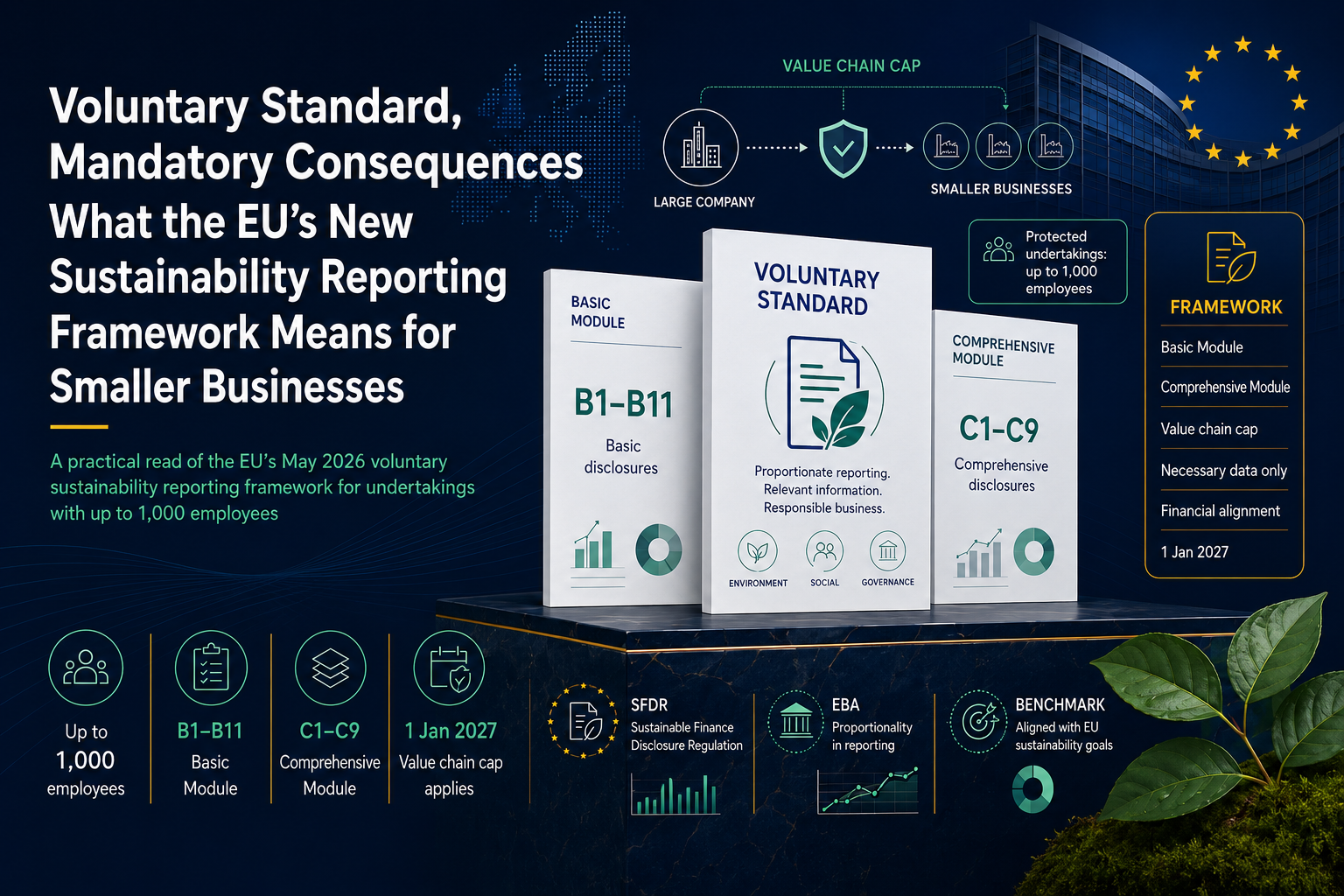
Voluntary Standard, Mandatory Consequences: What the EU's New Sustainability Reporting Framework Means for Smaller Businesses
On 6 May 2026, the European Commission published a draft regulation establishing a voluntary sustainability reporting standard for companies with up to 1,000 employees. It serves two purposes: giving smaller businesses a proportionate disclosure framework, and defining the legal ceiling on what large companies may demand from their supply chains. What the standard includes — and what it explicitly excludes — now determines the data rights of millions of European businesses.
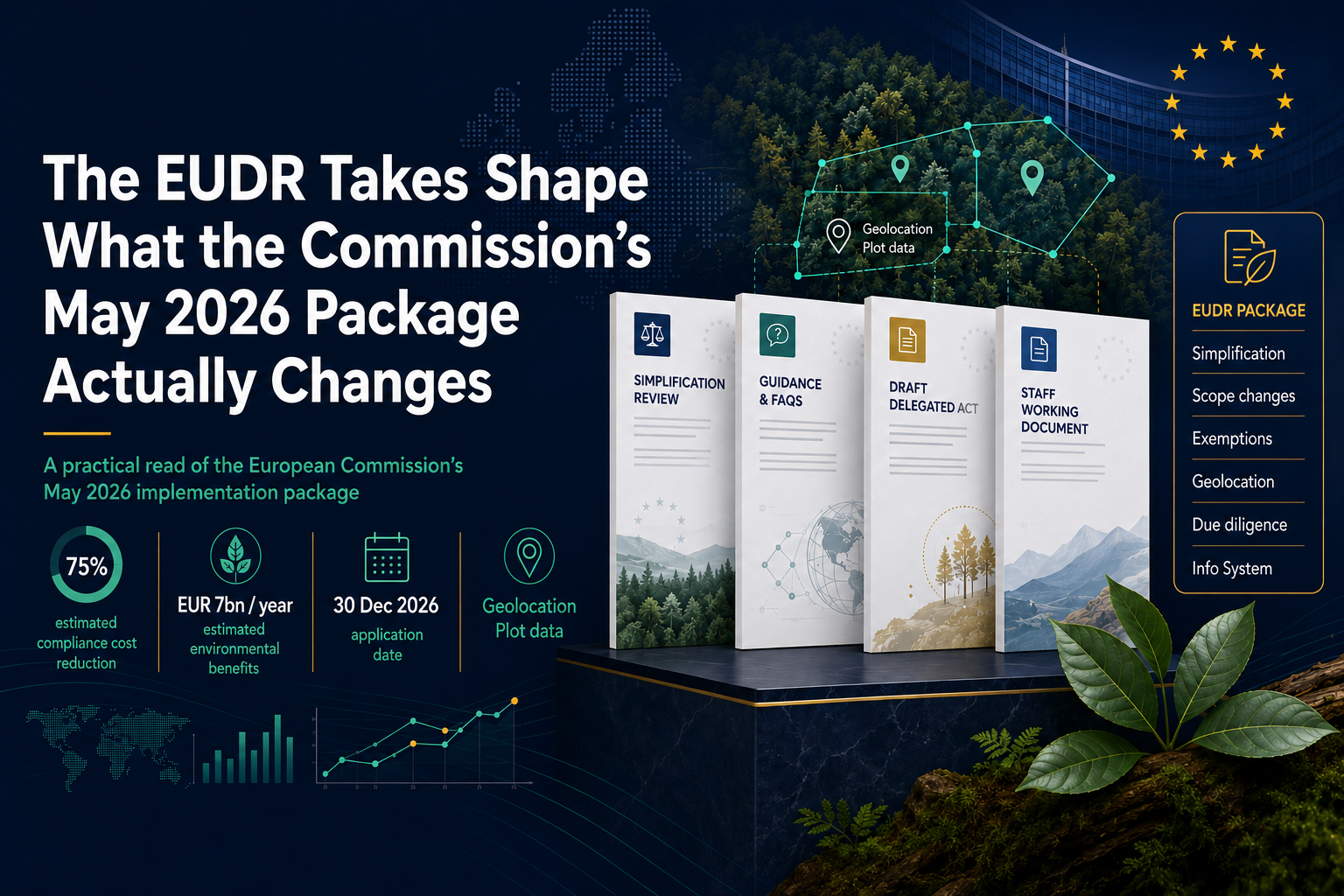
The EUDR Takes Shape: What the Commission's May 2026 Package Actually Changes
On 4 May 2026, the European Commission published its most comprehensive EUDR implementation package to date: a simplification review, updated guidance, a draft delegated act on product scope, and a staff working document on methodology. Application begins in less than eight months. The package is worth reading carefully — not through any single headline. Here is what it actually changes, and what it means for companies still building the systems that will determine their access to the EU market from December 2026.
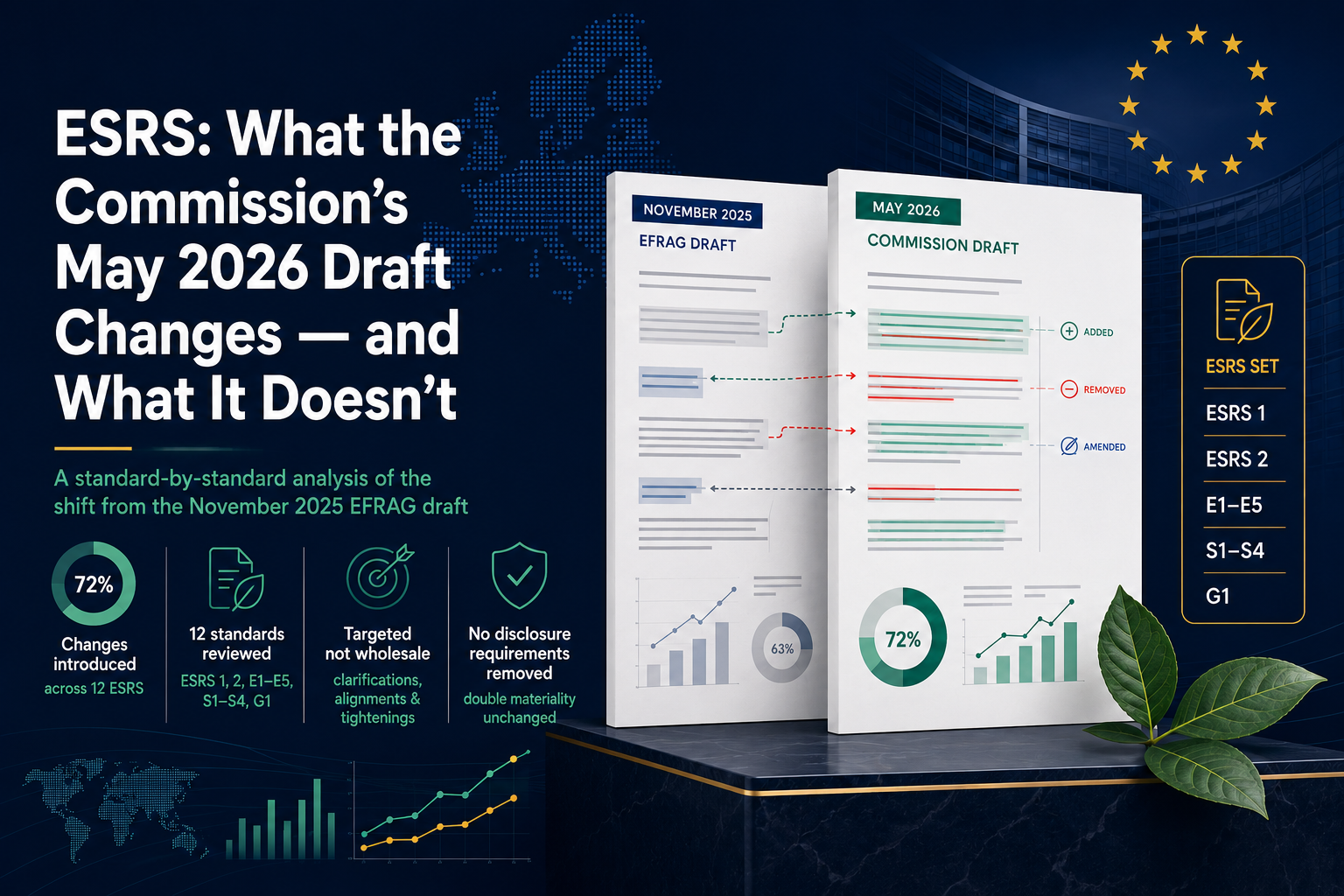
What the Commission's May 2026 Draft Changes and What It Doesn't
On May 6, the European Commission published its revised ESRS draft — the most complete signal yet of where the final standards will land. We compared all 12 standards against the November 2025 EFRAG version. The dominant narrative is simplification. That reading is incomplete. The May draft also introduces targeted tightenings, methodological clarifications, and a systematic alignment of all four social standards with CSDDD due diligence language. Here is what actually changed, what held, and what it means for reporting programmes already in motion.

Why Sustainability Decisions Rarely Optimize: Bounded Rationality in Practice
Sustainability decisions often “satisfice” rather than optimize. Bounded rationality explains why initiatives narrow, stop at “good enough,” and fragment into sub-goals—and what sustainability governance can do about it.

Sustainability Under Constraint: Why Progress Stalls Even When Commitments Are Public
Why sustainability stalls isn’t mainly about awareness or disclosure anymore. It’s about decision-making under financial, cognitive, and governance constraints—and what leaders can change to unblock progress.

Compliance is not management: physical climate risk as a governance challenge
Disclosure has made physical climate risk visible. Markets have priced it. Regulation has formalised it. The unresolved challenge is whether organisations are actually equipped to govern it.

Why climate regulation is converging on physical risk
The regulatory focus on physical climate risk is not ideological. Standards such as ESRS and IFRS are responding to financial risks that markets already price and strategies are beginning to absorb.

When climate risk enters the cost of capital
Once physical climate risk influences capital allocation, it stops being a peripheral sustainability concern and becomes a strategic constraint. This article examines how climate exposure reshapes investment decisions, financial resilience, and long-term competitiveness.

The market has already moved: pricing physical climate risk
Physical climate risk is no longer a forward-looking concern. Evidence from the banking market shows that it is already embedded in lending conditions, increasing borrowing costs and reshaping loan structures. This article examines how and why the market has moved ahead of regulation.

From Green Marketing to Real Governance: Where Corporate Sustainability Is Heading
The future of corporate sustainability will not be defined by better stories, louder commitments, or more ambitious claims. It will be defined by governance: how decisions are made, trade-offs are managed, and limits are acknowledged.

How to Communicate Limits, Failures, and Risk Without Losing Credibility
Credibility in sustainability communication is rarely lost because companies disclose too much. It is lost when disclosures are vague, unstructured, or disconnected from decisions. Communicating limits well is less about bravery—and more about discipline.

Honesty vs. Compliance: Patagonia Through the Lens of CSRD and IFRS
The perceived conflict between honest sustainability narratives and regulatory compliance is largely artificial. Under CSRD and global sustainability standards, the issue is not optimism versus honesty—but whether disclosures are coherent, traceable, and decision-useful.

Radical Transparency: What to Learn (and What Not to Learn) from the Patagonia Case
Transparency is often treated as a virtue in itself. But without governance, structure, and accountability, openness can quickly turn into exposure without control. The Patagonia case offers lessons—but not the ones most people rush to copy.


Nothing We Do Is Sustainable: Why This Sentence Made So Many People Uncomfortable
When a company states that “nothing we do is sustainable,” the reaction is rarely curiosity—it is discomfort. Not because the statement is false, but because it exposes a tension the sustainability field still struggles to handle: the gap between aspiration and reality.

After the Crisis - Principles for a New Consulting
After a structural crisis, consulting faces a defining choice. Not whether it will survive, but what kind of consulting deserves to endure in a changed world.

From Firms to Systems
As consulting shifts from firms to systems, value no longer resides in scale or prestige, but in how knowledge is structured, reused, and transferred. The future is architectural.

Consulting That Creates Dependency vs. Consulting That Builds Capability
For decades, long-term consulting relationships were seen as proof of value. Today, clients are asking a harder question: does continuity reflect impact—or dependency built into the model itself?

Will AI Destroy Consulting? - A Poorly Framed Question
Artificial intelligence is not destroying consulting. It is exposing which parts of the traditional model never truly created value. By lowering the cost of analysis and accelerating delivery, AI forces a deeper question: what are clients actually paying for, and why?

When Even McKinsey Is Not Immune
If even McKinsey is under pressure, the issue is not an isolated failure. Layoffs at the industry’s most emblematic firm reveal deeper structural tensions shared across consulting: scale, complexity, and a model increasingly misaligned with how clients define value today.
Book a free discovery call
Not sure what you need? That’s normal. We’ll map your priorities together and recommend the best way to move forward.